
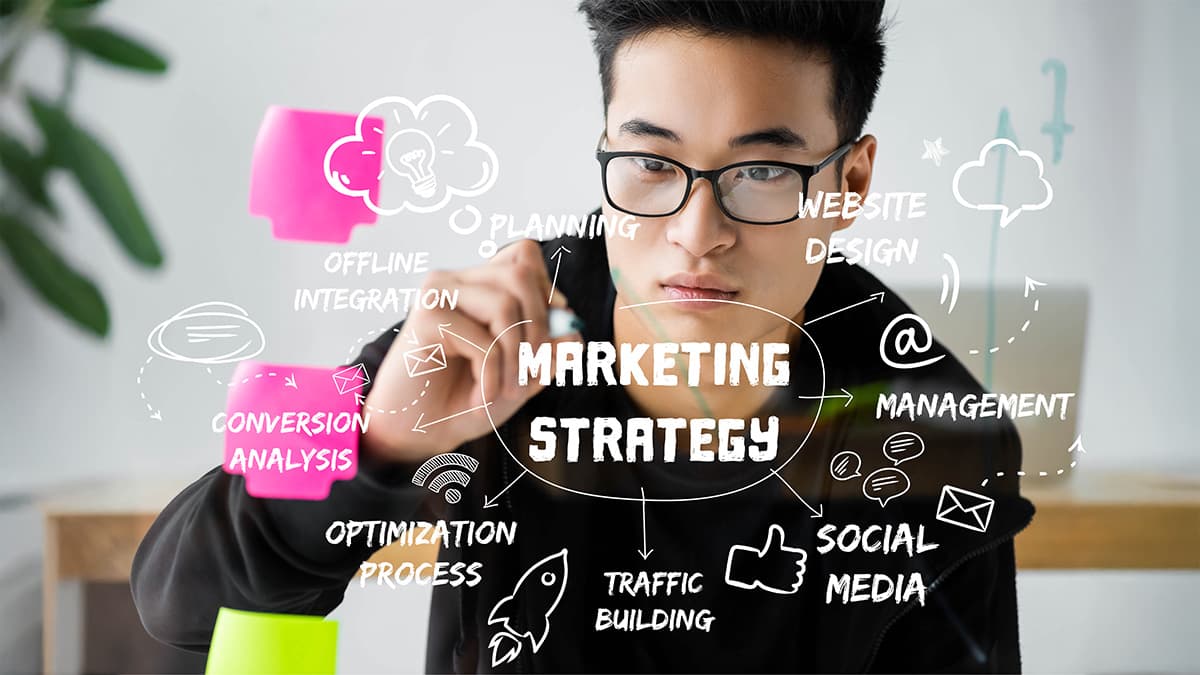
For SMEs, digital marketing is no longer just a matter of "being visible online". The real challenge is reaching the right people on a limited budget, building trust, and converting that interest into concrete sales. The way to achieve this without massive ad budgets or large marketing teams isn't to try to be present on every channel at once — it's to activate the channels that will take you to your goal by the shortest route, in the right order.
Most SMEs face the same dilemma when stepping into digital marketing: Should they do SEO first, run ads, focus on social media, or redesign the website? The right answer varies depending on where the business currently stands, but the core principle doesn't change: a site with a weak foundation, unplanned campaigns, and irregular content production won't deliver sustainable results. A digital marketing strategy that works treats channels not separately but as an integrated system.
Why should SMEs think strategically in digital marketing?
The most obvious advantage of SMEs is agility. Decisions are made faster, the relationship with the customer is closer, and it's possible to secure a strong position in local or niche markets. On the other hand, when this agility is used without strategy, the biggest risk becomes resource waste. A poorly targeted ad, a site that produces no conversions, or unplanned social media activity can quickly burn through the budget.
Strategy is not a luxury for SMEs — it's a necessity, because success in digital comes not just from being visible, but from showing the right message to the right person at the right moment. Sharing content on every platform or running ads doesn't get you anywhere on its own. First, the answers to these questions need to be clarified:
- Who is the target customer?
- What problem do they face most?
- What is the core differentiator that sets you apart from competitors?
- Through which channels does the customer reach you?
- How clear is the process that converts visitors into customers?
Once these questions are clarified, digital marketing activities move from being scattered to being tied to business goals.
Why does marketing fall short without a website?
The center of digital marketing activities is the website. Social media accounts, ad campaigns, and Google visibility — all of these direct users to your site at some point. And most of the time, this is also where decisions are made. If your site is slow, problematic on mobile, doesn't inspire trust, or makes communication difficult, the marketing budget quietly goes to waste.
Three key elements stand out in a well-functioning website: speed, clarity, and conversion-focused design. Fast-loading pages directly affect both user experience and SEO performance. Mobile compatibility is no longer an added feature — it's a basic requirement. Additionally, visitors should be able to find the answers to three questions within a few seconds: What does this business do? How does it benefit me? How can I get in touch?
Especially for service-providing SMEs, the site needs to include clear service descriptions, trust-building references or example projects, clear calls to action, easy contact forms and quote areas, and institutional trust elements like FAQ and blog sections.
Even the most powerful digital marketing channel won't deliver expected results when it sends traffic to a weak site. That's why investment should often begin first with strengthening the site's infrastructure.
How to build long-term visibility with SEO?
When properly structured, SEO is one of the most valuable channels that can provide organic visibility without constant ad spending. The key point here is not to chase only high-volume keywords, but to focus on searches that carry purchase intent, are close to the service, and reflect real customer searches.
For example, instead of the very broad term "website", more specific searches like "corporate web design service", "Istanbul SEO agency", or "e-commerce site for small business" generally bring more qualified visitors. It's useful to think of SEO work in three layers:
Technical SEO
The basic requirement is that search engines can crawl the site comfortably. Slow pages, incorrect redirects, broken links, poor mobile experience, and a confusing site architecture can directly reduce ranking performance.
Content SEO
Content must be produced that genuinely answers the questions users are asking. Blog posts, service pages, and guide content come into play here. What matters is not stuffing keywords but meeting search intent.
Local SEO
For businesses serving local customers, Google Business Profile, location-focused pages, review management, and local keywords are highly effective tools. For businesses with a physical store, office, or regional service area, local SEO can directly generate demand.
In summary, SEO for SMEs is the process of gaining long-term and sustainable visitors by appearing in relevant searches made by potential customers on Google.
When should Google Ads and performance ads come into play?
SEO needs time to produce results. In situations where demand needs to be collected more quickly — a newly launched service page, a seasonal campaign, a sector with intense competition, or a need to collect leads in a short time — Google Ads and other performance ads provide a clear advantage.
However, running ads and managing ads efficiently are not the same thing. The trap SMEs frequently fall into is setting up a campaign and measuring success only by the number of clicks. What actually needs to be looked at is how many people filled out a form, requested a quote, called, or moved to the purchase step.
For efficient ad management, the right keyword match types, strong ad copy, service-specific landing pages, negative keywords that filter out unnecessary clicks, and regular conversion tracking must all work together.
It must also be added: an ad doesn't hide the shortcomings of a poorly designed page — it just brings those shortcomings to light faster. Google Ads management cannot be considered independently of the site and conversion infrastructure.
What does social media marketing bring to SMEs?
Social media is not just an area for increasing follower count. When used correctly, it strengthens brand perception, makes first contact with potential customers, builds trust, and supports the sales process. But here too, there's no obligation to be present on every platform.
While LinkedIn may be more meaningful for a B2B service company, Instagram may deliver more efficient results for a visually-focused brand. Some businesses stand out with short video content, while for others, customer reviews and case examples are much more effective.
When building a social media strategy, balancing content around four axes is a good starting point: informative content, trust-building references and examples, posts reflecting brand character, and action-driving offer and campaign content. Sharing just to send the message "we're here" usually doesn't produce the expected result. The content plan must be tied to the target audience's behavior and business goals.
How does content marketing strengthen the sales process?
Content marketing is one of the most effective ways for an SME to make its expertise visible. Potential customers usually research before buying, compare alternatives, and look for trust. Blog posts, guides, frequently asked questions, case examples, and explanatory pages are the elements that build this trust.
Especially in the service sector, content is the digital extension of the sales team. Content that preemptively answers questions on the user's mind can shorten the decision process; it also feeds SEO performance. Search engines position sites that offer depth around a topic and provide value to users higher.
Well-structured content marketing demonstrates brand expertise, attracts organic traffic, reduces sales objections, reinforces trust, and increases the efficiency of ad campaigns. For this reason, content production should be planned not to fill a gap, but to support commercial goals.
Why do email and remarketing still work?
Just because a user visited your site doesn't mean they immediately become a customer. Especially in SME services, the decision process can take days or even weeks. This is where email marketing and remarketing campaigns come into play.
Setting up follow-up flows for users who filled out a quote form but didn't come back, added items to their cart but exited, or examined specific service pages but didn't decide is extremely valuable. The goal here is not to apply pressure — it's to remind and make the decision easier.
A few simple but effective examples:
- Sending an automatic thank-you and information email to users who requested a quote
- Showing remarketing ads to users who visited a service page
- Offering cross-selling or re-service proposals to existing customers
- Sending educational content and next-step guidance to users who made downloads
The power of this channel lies in reaching people who have already shown interest. That's why it usually delivers noticeably higher conversion rates compared to cold audience ads.
The most common digital marketing mistakes SMEs make
The reason for failure is usually not insufficient budget. The real problem is moving forward without a system.
Having an unclear goal
The phrase "let's get more visible" alone doesn't form a strategy. The goal must be tied to a measurable point, such as increasing the number of quotes, driving traffic to the store, ranking higher in local searches, or collecting leads in a specific service.
Lack of measurement
If it's unknown which channel brings forms, which ad converts to sales, and which page loses users, then marketing can't be managed — it's just spending.
Neglecting conversion infrastructure
Effort is spent on attracting traffic, but why visitors don't get in touch is often not analyzed. Yet sometimes the problem isn't in the ad — it's in a slow form, insufficient content, or a page design that doesn't inspire trust.
An actionable digital marketing plan
Building a perfect system from the start isn't necessary. What matters is progressing in the right order. An actionable roadmap for the first 90 days can be drawn as follows:
- Phase 1: The website and measurement infrastructure are reviewed. Mobile experience, page speed, contact forms, conversion tracking, and basic SEO errors are addressed.
- Phase 2: Strong pages are prepared for core services. Each page focuses on a specific service, a user problem, and a call to action.
- Phase 3: SEO and content plan is activated. Keywords close to the service, blog content, and local visibility work are initiated.
- Phase 4: Performance ads are tested. Small but controlled campaigns focused on high-intent searches are structured.
- Phase 5: Optimization is done with the data gathered. Channels, content, and page structures that bring the most conversions are strengthened; weak points are revised.
Core metrics to monitor regularly: organic traffic, form conversion rate, ad cost, lead quality, phone calls, quote requests, and sales conversion rate.
Conclusion: The right strategy — less waste, more growth
The most effective digital marketing strategies produce results in the hands of businesses that build the right system, not those that use the most tools. When a strong website, goal-appropriate SEO, controlled ad management, planned content production, and regular measurement come together, digital marketing stops being guesswork and turns into a manageable growth channel.
What makes the difference is not managing each channel independently, but structuring them all as a whole tied to business goals. This way, the budget is used more efficiently and growth becomes more predictable.
If you're not sure which channel to prioritize for your business, you can draw a clear roadmap by analyzing your current digital presence from a technical, content, and conversion perspective. The right strategy usually comes not from spending more, but from planning smarter.
Frequently Asked Questions
Where should SMEs start with digital marketing?
The first step is clarifying the website, the target audience, and the measurement infrastructure. Once the site is made fast, mobile-compatible, and conversion-ready, SEO, ads, and content work can be planned in order of priority.
Is SEO more effective, or advertising?
In the short term, advertising delivers faster returns; in the long term, SEO offers more sustainable and cost-effective visibility. The most efficient approach is generally to use both together and in a balanced way.
Which platform should small businesses focus on in social media?
This depends entirely on the target audience. LinkedIn generally delivers better results for B2B businesses, Instagram for visually-oriented brands, and Google Business Profile for businesses targeting local visibility. What matters is not being everywhere, but having a consistent presence on the platform where the target audience is active.
What should be done if the digital marketing budget is limited?
Instead of trying to be visible on every channel, it's smarter to focus on a few channels with the highest conversion potential. Increasing the budget without measuring is not a healthy approach; first, it's necessary to understand which parts of the current spending are working and which aren't.